WHAT IS CHOLESTEROL?
- Cholesterol is a waxy substance your body needs to build cells and make certain hormones.
- Your body makes the cholesterol it needs, while some also comes from the foods you eat.
THE PROBLEM?
- When cholesterol levels are too high, cholesterol can build up in the walls of your arteries.
- Over time, this can contribute to atherosclerosis, narrowing the arteries and increasing the risk of cardiovascular events such as heart attack and stroke.
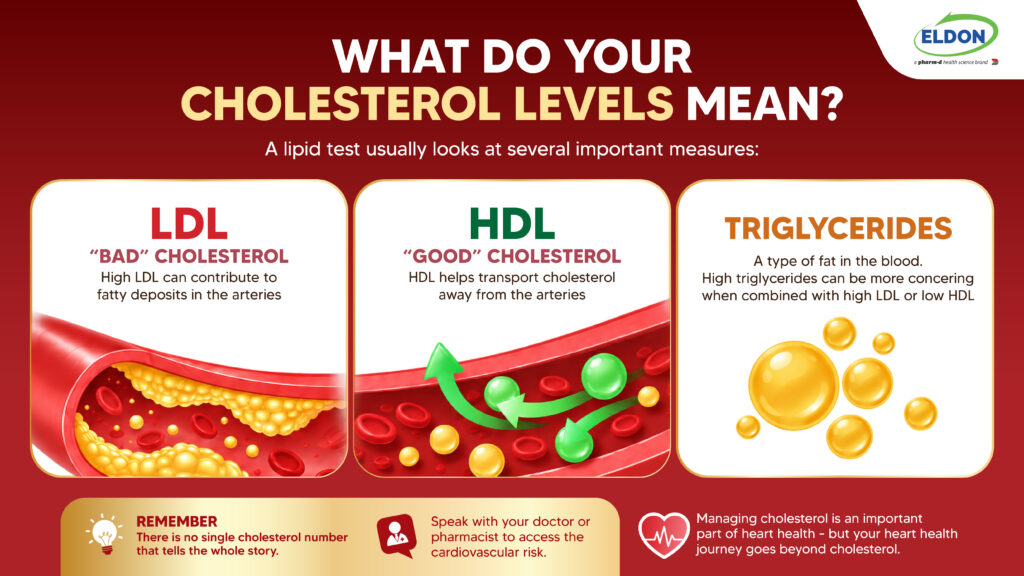
WHAT DO YOUR CHOLESTEROL LEVELS MEAN?
A lipid test usually looks at several important measures:
- LDL — “BAD” CHOLESTEROL
High LDL can contribute to fatty deposits in the arteries.
- HDL — “GOOD” CHOLESTEROL
HDL helps transport cholesterol away from the arteries. However, HDL should not be considered a treatment target on its own.
- TRIGLYCERIDES
A type of fat in the blood. High triglycerides can be more concerning when combined with high LDL or low HDL.
REMEMBER
There is no single cholesterol number that tells the whole story.
Your healthcare professional considers your cholesterol results together with factors such as age, family history, smoking, diabetes and blood pressure when assessing your cardiovascular risk.
PREVENT & MANAGE HIGH CHOLESTEROL
1. KNOW YOUR NUMBERS
Regular cholesterol testing helps you understand and manage your cardiovascular risk.
2. EAT HEART-HEALTHY
Choose a balanced diet rich in vegetables, fruits, whole grains and other nutritious foods.
3. STAY ACTIVE
Regular physical activity can help improve cholesterol and overall cardiovascular health.
4. FOLLOW YOUR TREATMENT PLAN
If cholesterol-lowering medication is prescribed, take it as directed and discuss any concerns with your healthcare professional.
5. LOOK FOR QUALITY NUTRITIONAL SUPPORT
When choosing a heart-health supplement, don’t look at DOSAGE alone. LOOK AT QUALITY.
Managing cholesterol is an important part of heart health — but your heart-health journey goes beyond cholesterol.