

What Is Glycemic Index (GI) and Why It Matters for Diabetics
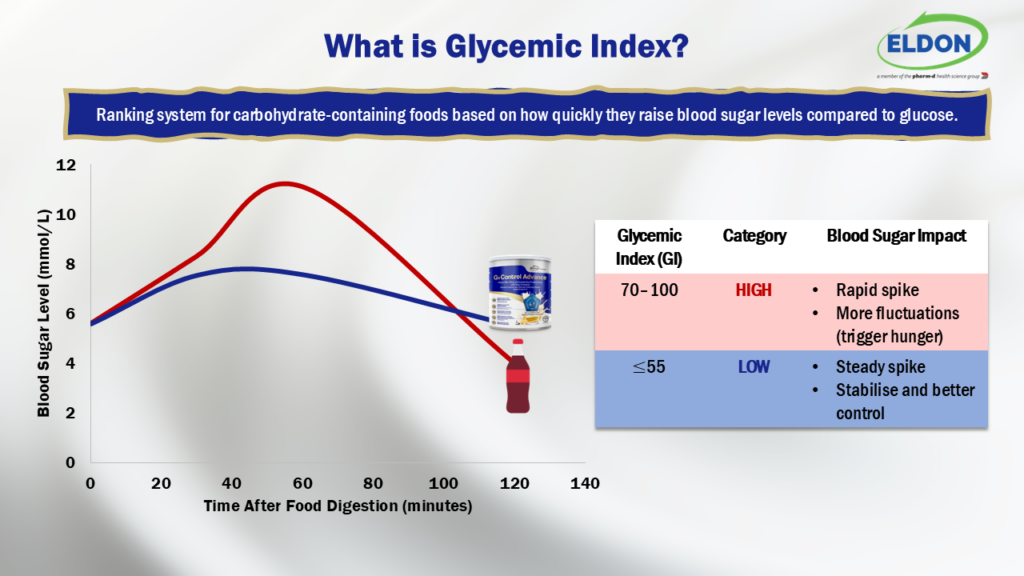
The Glycemic Index (GI) is a scale that measures how quickly carbohydrate-containing foods raise your blood sugar after eating. The scale ranges from 0 to 100, with pure glucose set at 100.
- Low GI (55 or below): Digested and absorbed more slowly, leading to a steadier rise in blood sugar.
- Medium GI (56–69): Causes a moderate increase in blood sugar.
- High GI (70 or above): Digested quickly, resulting in a rapid spike in blood sugar.
When blood sugar rises slowly instead of spiking quickly, this helps avoid sudden peaks and crashes in blood sugar, which can leave you feeling tired, hungry, or low in energy. For people with diabetes or those trying to manage their blood sugar, choosing lower GI foods can help keep blood sugar levels steadier throughout the day and support better long-term health. For people with diabetes or prediabetes, choosing lower GI foods can make blood sugar easier to manage as part of a balanced diet.
It’s also important to know that a food’s GI is not fixed. Several factors can affect how quickly carbohydrates are digested, including the type of carbohydrate, amount of fibre, protein and healthy fats in the meal, how processed or finely milled the food is, how it is cooked, and even how ripe certain fruits are. For example, whole grains generally have a lower GI than refined grains, and eating carbohydrates together with protein, healthy fats, or vegetables can help slow the rise in blood sugar.
The table below provides examples of common Malaysian carbohydrate foods categorised according to their Glycemic Index (GI) levels.
| Low GI (55 or below) | Medium GI (56–69) | High GI (70 or above) | |
| Rice | Barley | Basmati Rice Brown rice Parboiled rice Red rice | Glutinous rice Jasmine rice Instant porridge White rice Sago |
| Bread and cereals products | All bran breakfast cereals Muesli Wholegrain bread varieties | Capati Idli Oatmeal Wholemeal barley flour bread | Cornflakes Rice crackers Roti Canai White flour bread |
| Noodle and Pasta | Lasagna pasta sheets Spaghetti | Spaghetti, white, durum wheat semolina Udon noodles Wheat noodles | Fried macaroni Fried meehoon Fried rice noodles Rice noodle (kuih teow) |
| Milk | Full fat milk Low fat milk Skim milk Soymilk (without added sugar) Yogurt Eldon Nutrition G Control Advance | Ice cream Sweetened condensed milk | Teh Tarik |
| Fruits | Apple Mango Oranges Plum | Banana Dates Papaya Pineapples Raisin | Lychee Watermelon |
| Legumes | Baked beans Chickpeas Lentils Mung bean | ||
| Tubers | Cassava, boiled Sweet potato, boiled | Pumpkins, boiled Sweet corn, boiled | Potato, boiled |
The benefits of choosing lower GI foods as part of a healthy eating pattern are supported by health authorities such as the Ministry of Health Malaysia (Kementerian Kesihatan Malaysia) and the American Diabetes Association (ADA)
When selecting nutrition products, don’t just rely on marketing claims. Look for products with human clinical GI testing, where the GI is measured in real people rather than estimated in the laboratory. This provides greater confidence that the product performs as intended in everyday life. Check out Eldon Nutrition G Control Advance which formulated with a clinically tested low GI profile!
Reference:
- Atkinson, F. S., Brand-Miller, J. C., Foster-Powell, K., Buyken, A. E., & Goletzke, J. (2021). International tables of glycemic index and glycemic load values 2021: A systematic review. The American Journal of Clinical Nutrition, 114(5), 1625–1632. https://doi.org/10.1093/ajcn/nqab233
- American Diabetes Association. (2011). How foods affect blood glucose: Glycemic impact. Clinical Diabetes, 29(4), 161. https://doi.org/10.2337/diaclin.29.4.161
- Ministry of Health Malaysia, Academy of Medicine Malaysia, Malaysia Endocrine & Metabolic Society, Family Medicine Specialists Association of Malaysia, & Diabetes Malaysia. (2020). Clinical practice guidelines: Management of type 2 diabetes mellitus (6th ed.). Ministry of Health Malaysia. https://mems.my/wp-content/uploads/2021/03/CPG-T2DM_6th-Edition-2020_210226.pdf