

Why Fish Oil Quality
Is More Than Just Strength?
Fish oil is widely known for its omega-3 benefits, and many products highlight their high strength as a key selling point. However, strength alone does not determine the overall quality of fish oil.
The way the oil is sourced, purified, and tested plays an equally important role. Without proper purification, fish oil may contain unwanted substances such as heavy metals, environmental contaminants, or oxidized compounds that can affect its freshness and safety.
Therefore, evaluating fish oil quality requires looking beyond strength to ensure the oil is fresh, stable and pure.
The Three Key Factors That Defines Fish Oil Quality
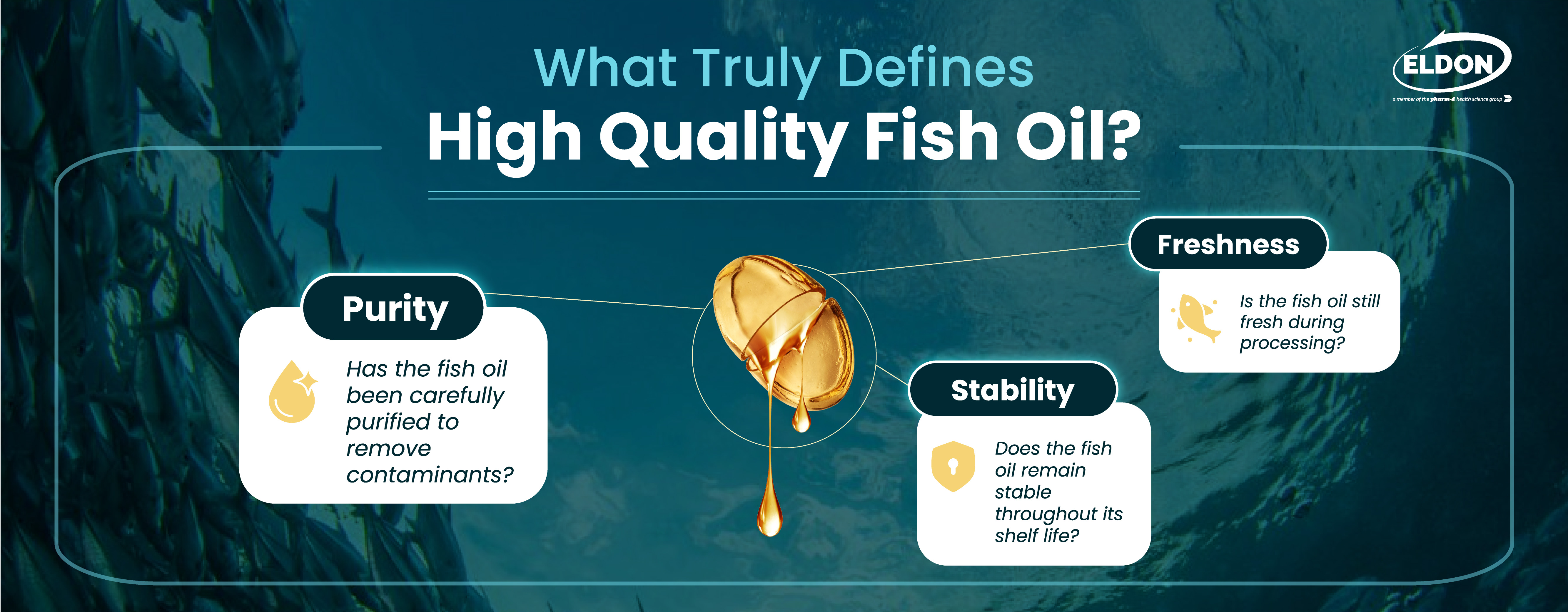
Fresh fish oil contains low levels of oxidation, helping preserve its nutritional value
Stable fish oil is able to resist turning rancid under normal storage conditions
Pure fish oil undergoes multi-stage purification process to remove potential contaminants such as heavy metals and environmental contaminants
How Laboratory Testing Verifies Fish Oil Quality
The quality of fish oil can be scientifically verified through laboratory testing, giving consumers greater confidence in the quality of the product.
Common laboratory tests include:
Freshness Test (Peroxide value) – Ensure fish oil is at its freshest upon processing
Purity Test – Detects contaminants such as mercury, lead, cadmium and arsenic
Meanwhile, advanced tests can be performed to evaluate fish oil quality more thoroughly, such as:
Stability Test (TOTOX value) – Low totox value ensures the fish oil stays stable throughout its shelf life
Purity Test (PAHs test) – Identifies environmental pollutants that may be present in fish oil

See Eldon Omega-3 Pro Test Results
We believe quality should be transparent and verifiable. Our fish oil undergoes laboratory testing to assess its freshness, stability, and purity.
Rather than relying on claims alone, laboratory results provide transparent and objective verification of fish oil quality.