Not All CoQ10 Is Created Equal
- When choosing a CoQ10 supplement, it is not just about how much CoQ10 is on the label.
- The form, actual content and stability also matter.
- That is why we go beyond the label.
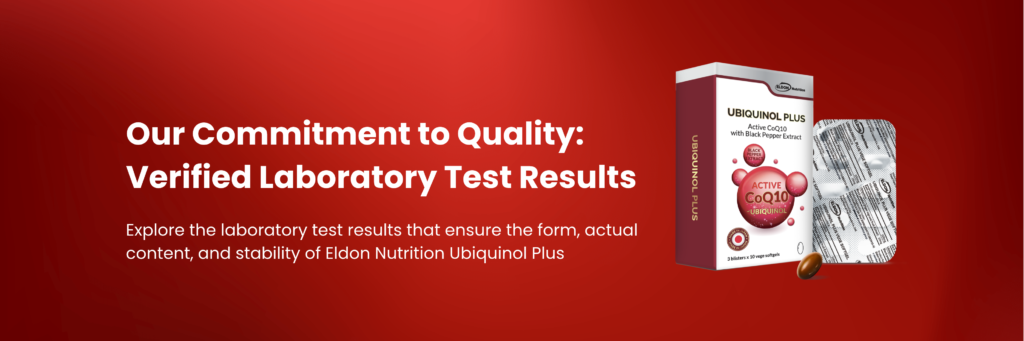
- Eldon Ubiquinol Plus is tested to verify:
✅ What form of CoQ10 is present
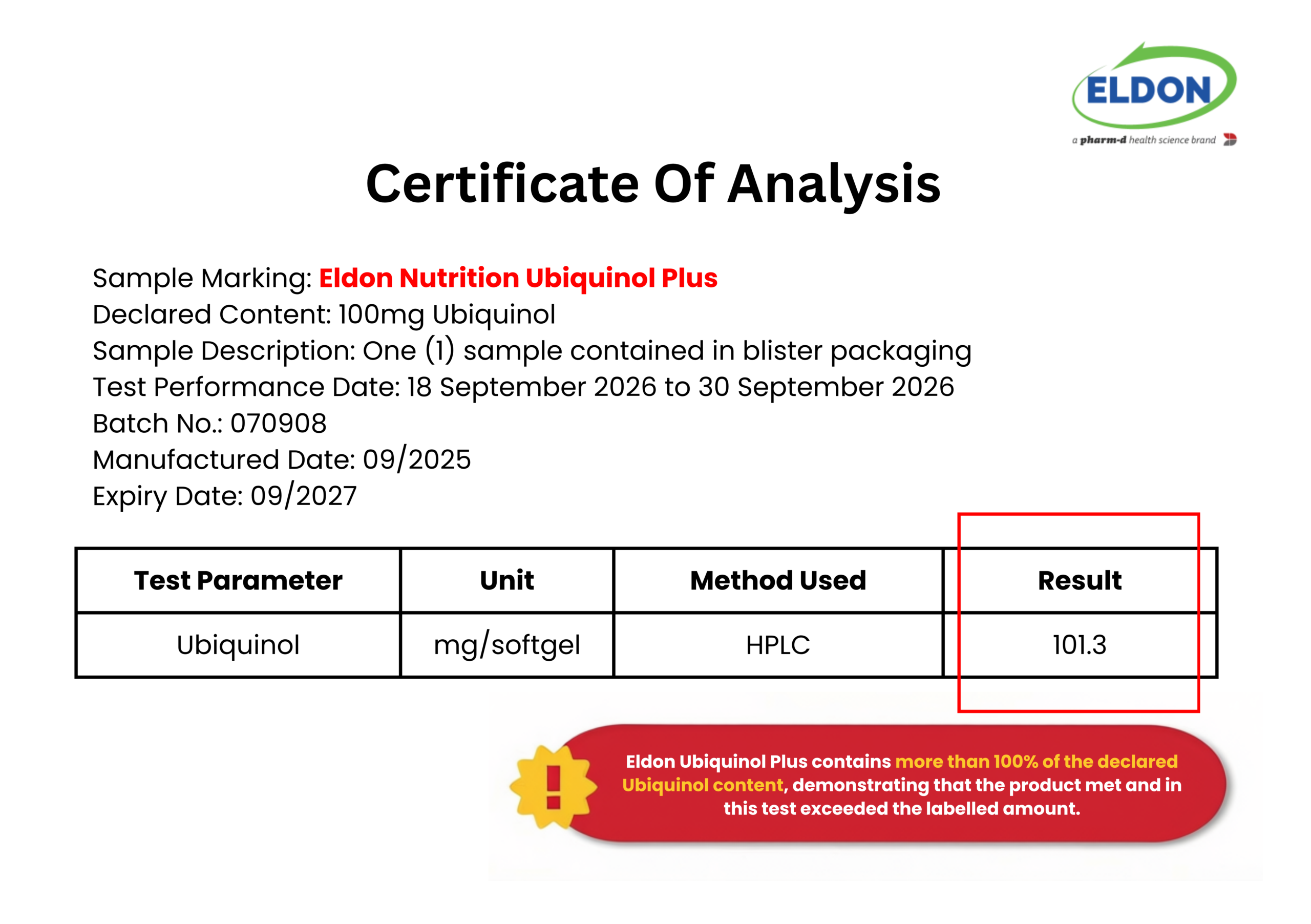
✅ How much Ubiquinol is actually present
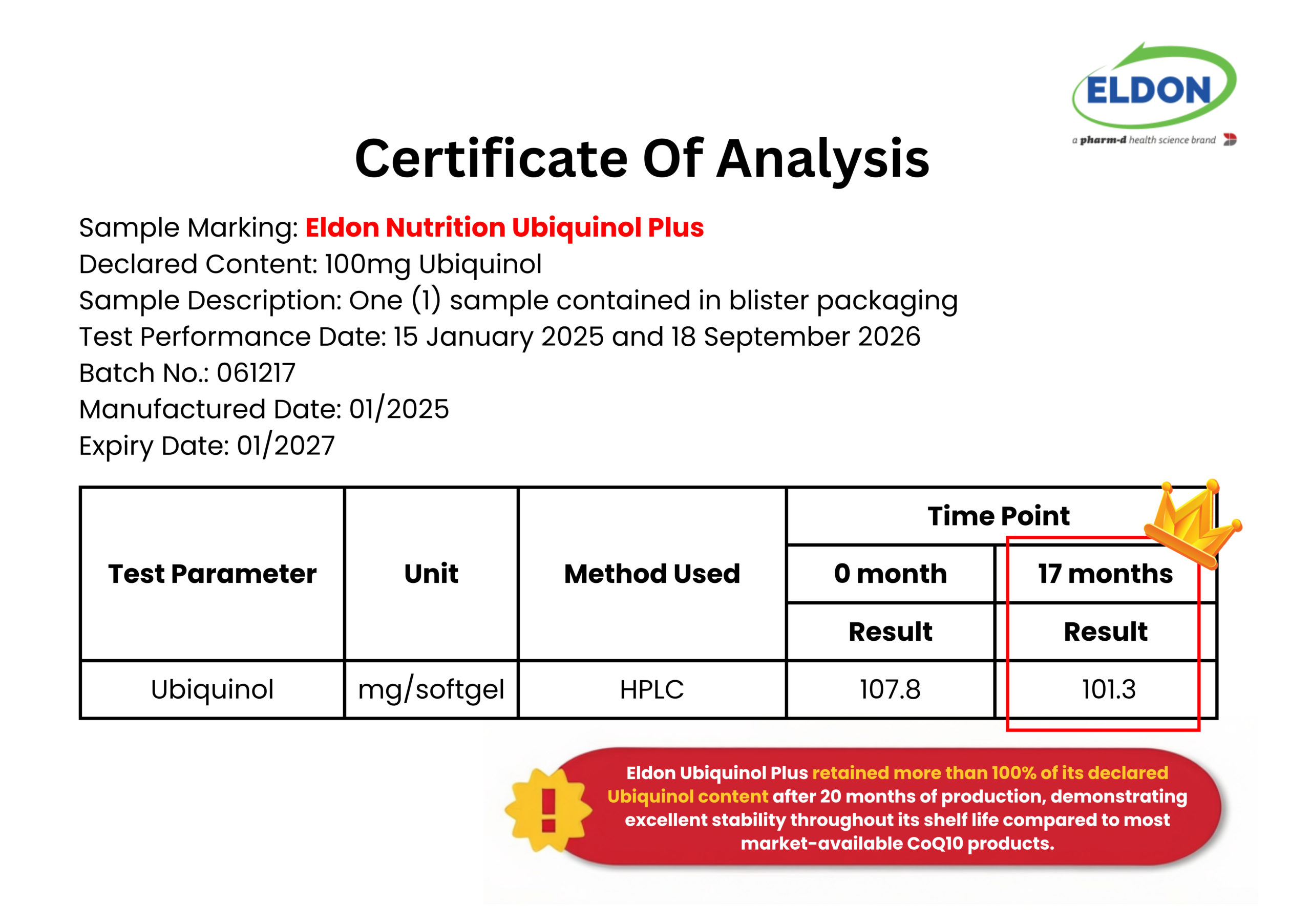
✅ Whether Ubiquinol remains stable over time - Because quality should be verified, not just claimed.
Common Test: Form & Content Test
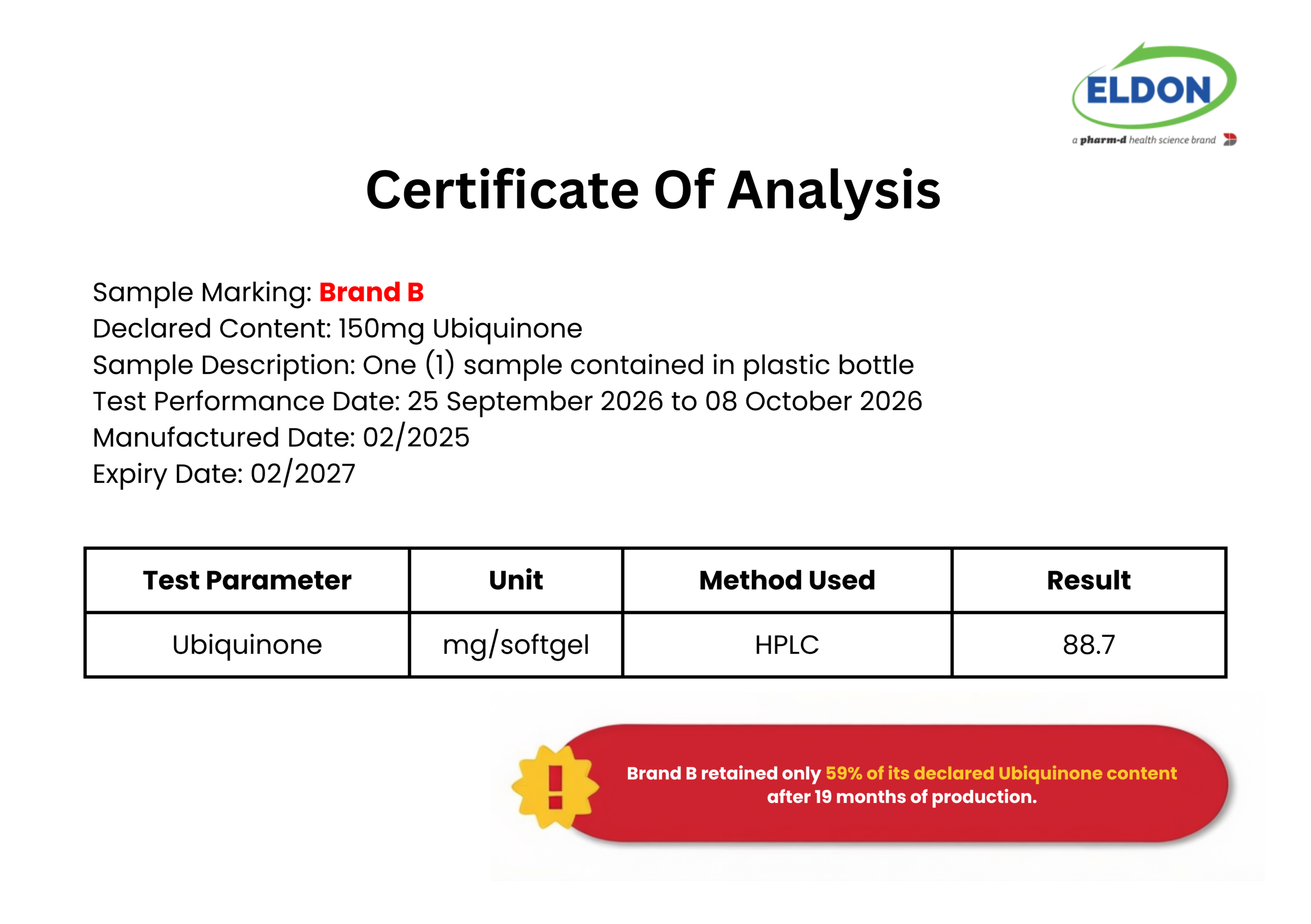
Is the Ubiquinol on the label really there?
The Ubiquinol Assay measures the actual Ubiquinol content in the product and verifies it against the declared amount.
What we check?
CoQ10 Form
→ Ubiquinol vs Ubiquinone
Ubiquinol Content
→ Actual amount of Ubiquinol
Why it matters?
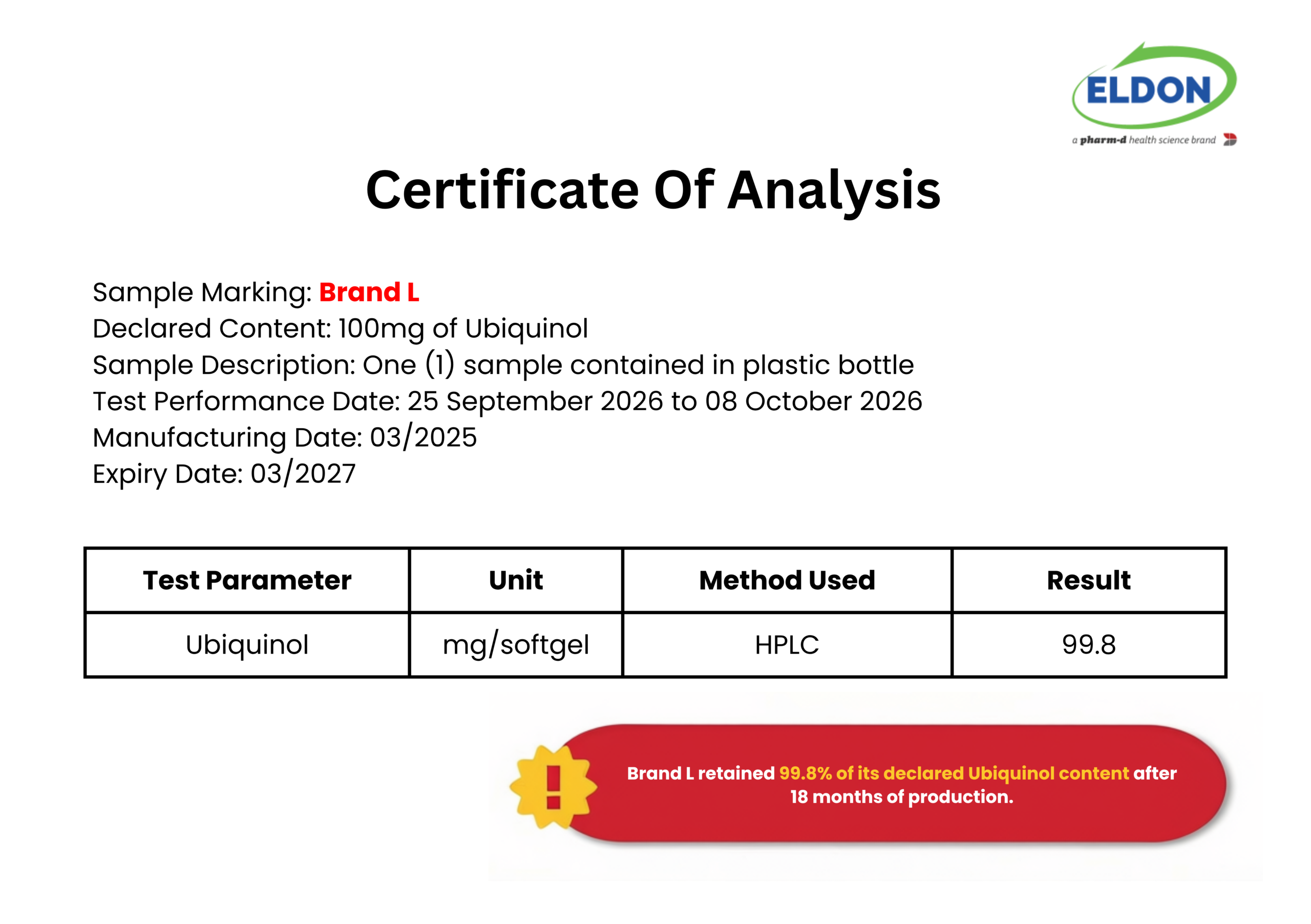
The label tells you what is declared. But laboratory testing tells you what is actually present.
More Quality Testing: Oxidative Stability
Does Ubiquinol stay in its intended form?
Active Ubiquinol can undergo oxidation (degradation) during storage, resulting in conversion to Ubiquinone. The Ubiquinol assay helps assess the stability against oxidation, particularly as the product approaches the end of its shelf life. Just like fish oil, heat and oxygen can cause Ubiquinol to oxidize into Ubiquinone, reducing the active Ubiquinol in the product.
Why it matters
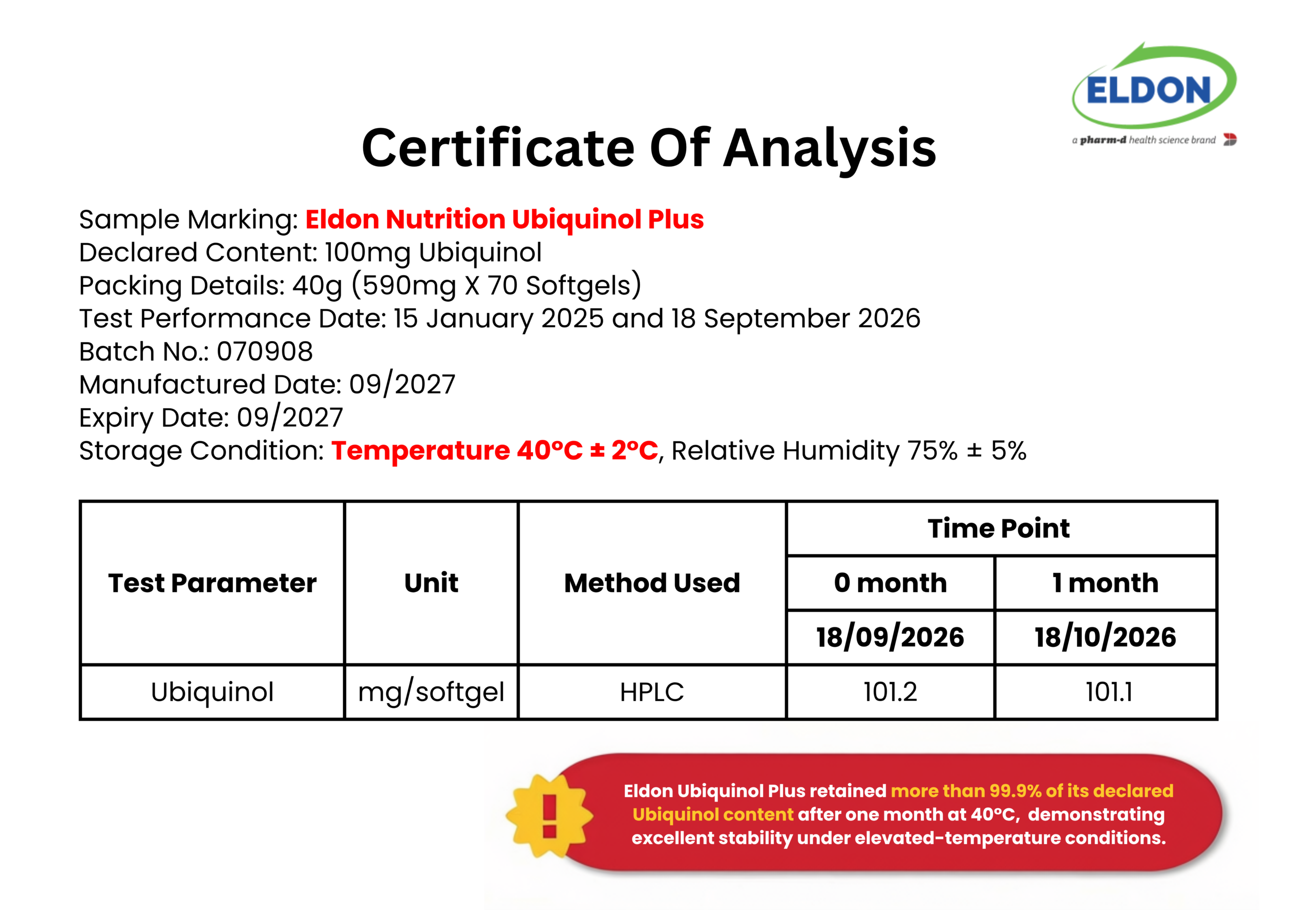
- Minimal changes in Ubiquinol content indicates good retention of the active Ubiquinol form, with limited oxidative conversion to the Ubiquinone form.
- Quality should not only be present at the start. It should be maintained throughout shelf life.
More Quality Testing: Accelerated Stability Test
How does Ubiquinol hold up under Malaysia’s hot climate?
Eldon Nutrition Ubiquinol Plus is stored under accelerated temperature conditions at 40°C, with Ubiquinol content monitored at 1-month intervals.
Why it matters
- Minimal changes in Ubiquinol content demonstrated good stability under storage conditions at 40°C.
- Because stability matters beyond the label.